Published April 10, 2021 08:22PM
4 Mobility Exercises for Strong Wrists
Hey, you — stop texting! OK, now use these four moves to mobilize your wrists, improve lifting performance and undo the negative effects of technology.

It is one of the most overlooked areas of the body for both strength and mobility, yet it is part of almost every movement we perform inside and outside the gym: the wrist. We often forget about our wrists and forearms because they don’t usually present the same degree of limitation (or complaining!) as larger joints such as the hips and shoulders. Couple that with an increase in tiny, daily movements like texting, typing and scrolling, and your wrists can become tight and inflexible, affecting lifts such as overhead presses, carries, pull-ups and front squats.
The good news is that mobilizing your wrists and forearms is simple and quick, and it requires no equipment at all. Use these four moves as part of a dynamic warm-up or as mobility training postworkout and reap the immediate rewards.
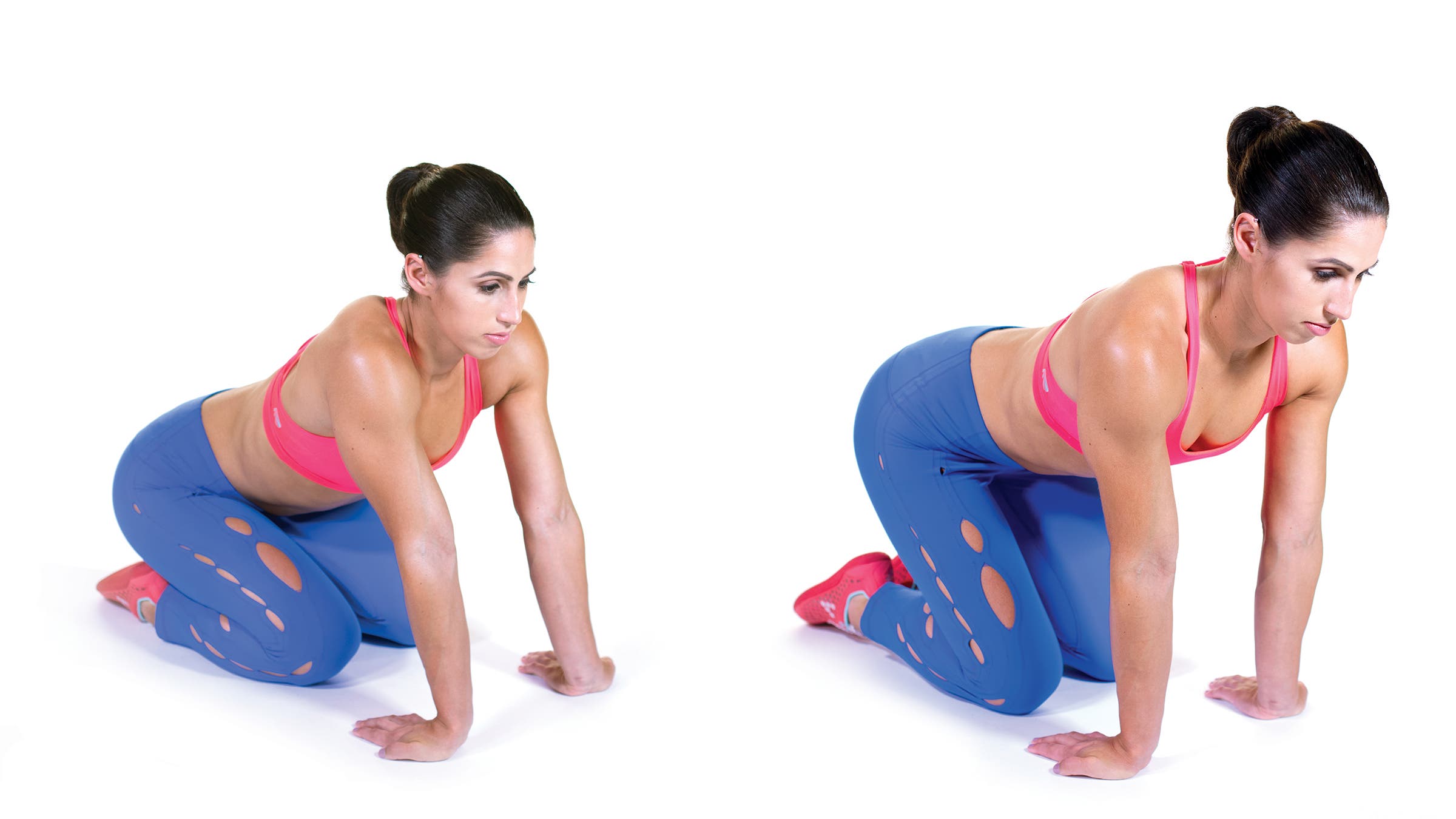
Quadruped Forearm Stretch
Get on all fours on the floor with your fingers pointing toward your knees, hands underneath your shoulders. Slowly sit back onto your heels while keeping the heels of your palms on the floor. Pause when you feel a stretch and hold for 15 seconds. Do three sets.
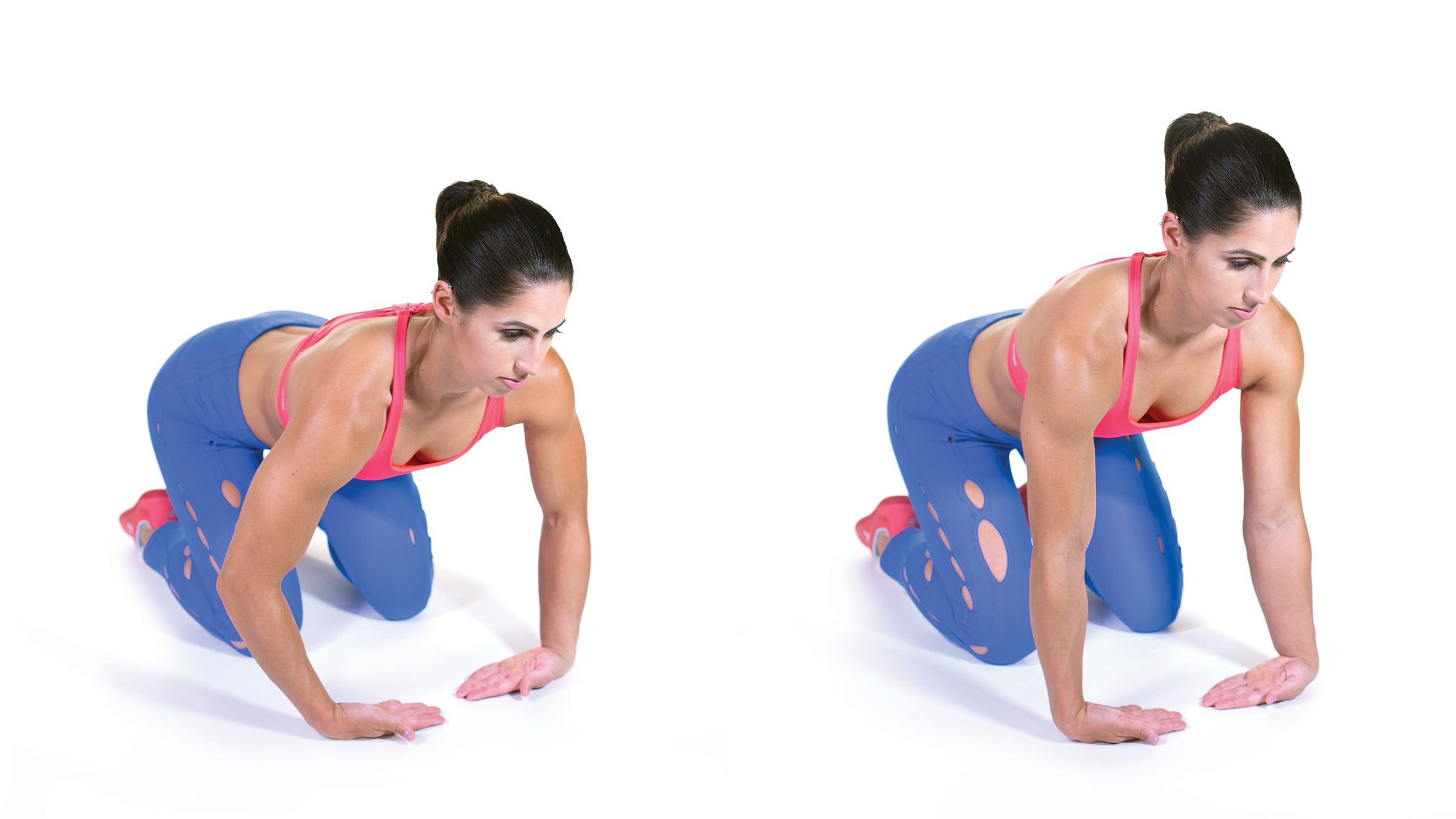
False Grip Stretch
Get on all fours and place your hands palm side up on the floor with your fingers turned inward toward one another, elbows slightly bent. Slowly straighten your elbows. Once you feel a stretch in the top of your forearms, stop and hold for 15 seconds. Do three sets.
ADVERTISEMENT
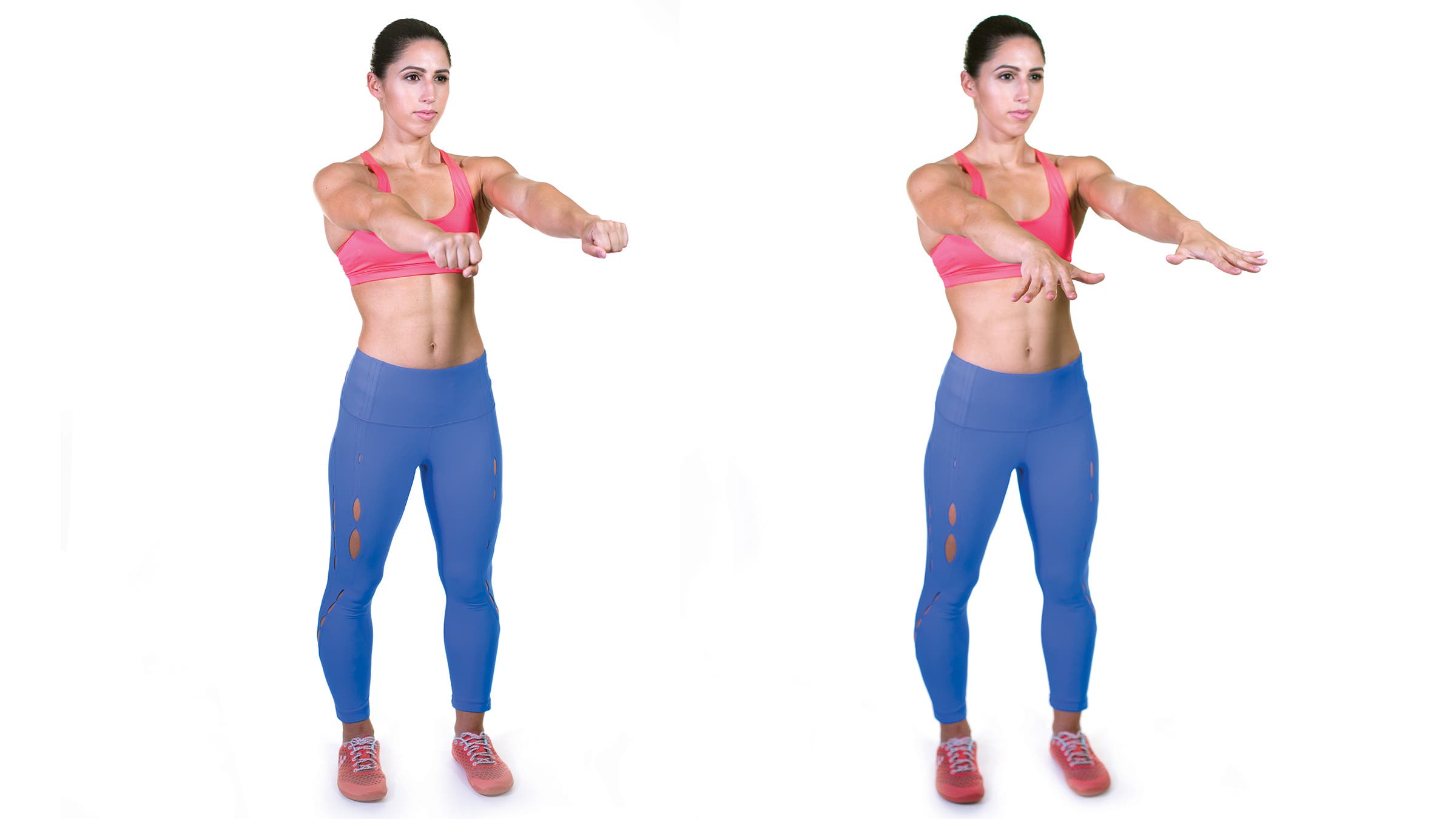
Blinker
Stand with your arms extended straight out from your shoulders, parallel to the floor, palms facing down. Alternate between making a tight fist and opening your hands and spreading your fingers. Move quickly and do two sets of 25 reps. If your forearms begin to burn, you’re doing it correctly!
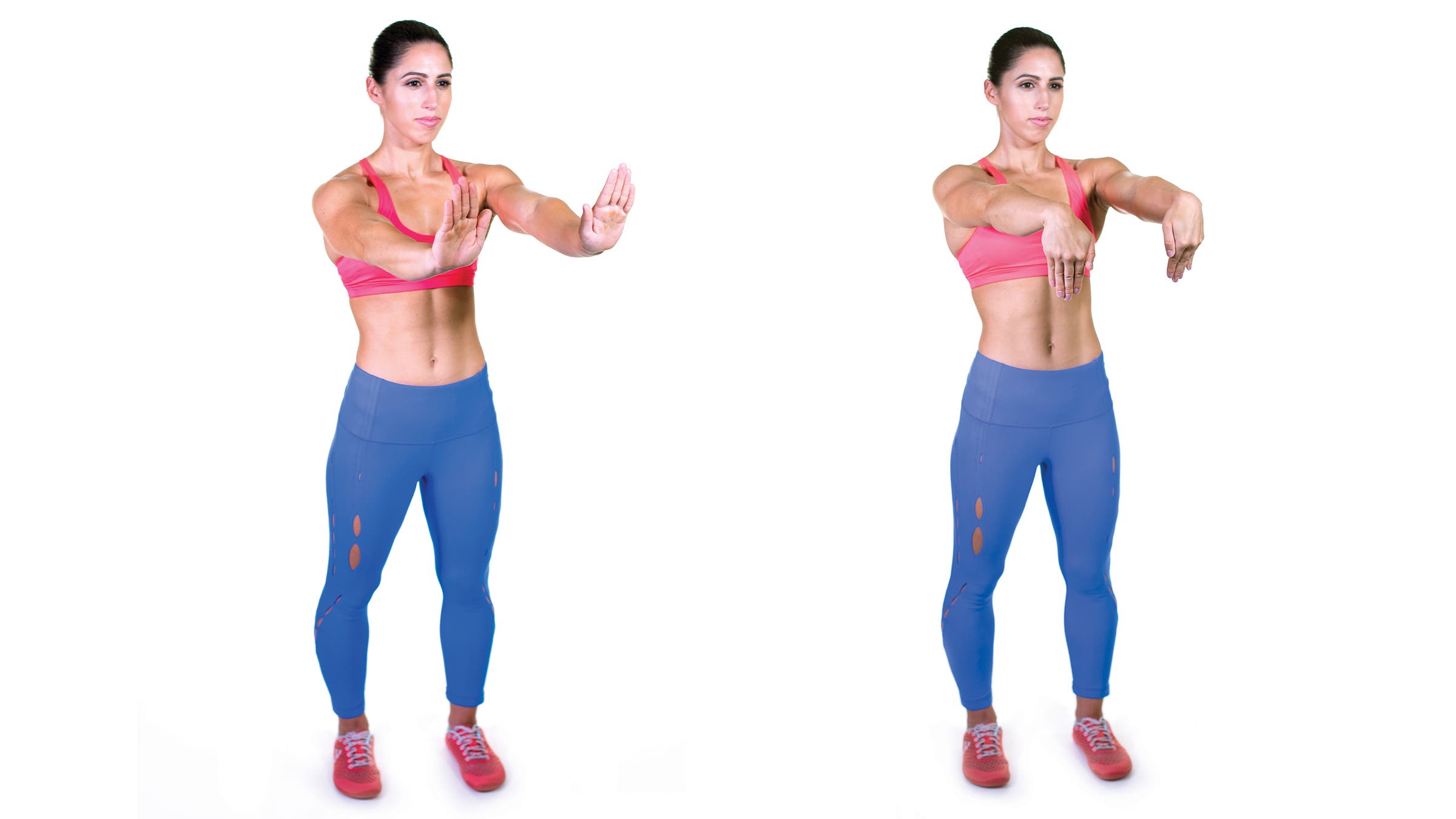
Flapper
Stand with your arms extended straight out from our shoulders, parallel to the floor, fingers together. Extend your wrists and lift your fingers up as high as you can, then flex your wrists by drawing your fingers down as far as you can. “Flap” your hands up and down for two sets of 25 reps.
Fast Anatomy Lesson
The muscles that move your wrists are located in your forearm and are generally divided into flexors and extensors. In conjunction with a number of smaller muscles, the forearms allow your wrists to move up, down, side to side and in rotation.
- Flexors: These muscles run along the underside of your forearm and come into play when you close your hand or pull your hand downward. Tightness here can make moves like handstands or a front squat, in which your wrists are in extension, uncomfortable or even painful.
- Extensors: The muscles in the top of your forearm work the opposite way, pulling your fi ngers up and open and putting your wrist in extension. Tightness here can negatively a ect your overhand grip in moves like a farmer’s carry or a pull-up.