Published February 12, 2021 02:00PM
If you buy through our links, we may earn an affiliate commission. This supports our mission to get more people active and outside.Learn about Outside Online's affiliate link policy
9 Ways to Climb Out of a Fitness Rut
Are you able to do your workouts with your eyes closed? It’s time to get out of that fitness rut and shake things up.
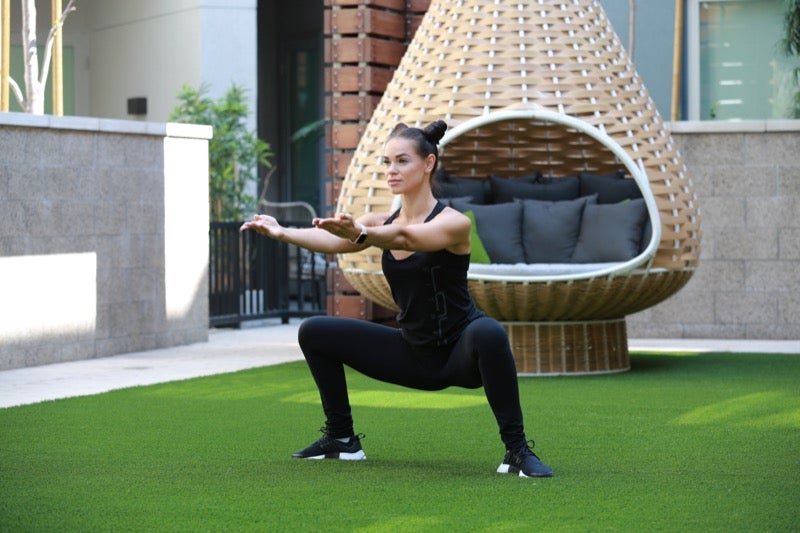
You know your workout like the back of your hand — because you do it five times every week. Now that you’ve got your trusty routine down, your brain can rest comfortably on autopilot while you go through the motions. That might be OK at the office, but it’s definitely not advisable at the gym.
“Doing the same gym routine puts you in serious danger of falling into a fitness rut,” says Los Angeles–based celebrity personal trainer Lalo Fuentes, CSCS, whose Freeze technique (included in the workouts below) has provided fast results for professional athletes and those in the entertainment industry. “Not only are fitness ruts a drag to your workout motivation, they also keep you from getting all that you can from your workout.”
Fuentes says that one common culprit of a fitness rut is overtraining because stress and a high volume of workouts can lead to injuries and lack of forward progress. If you’re overtraining, you may feel tired, sick, have trouble sleeping, suffer from muscle pain and feel weak. Of course, the opposite also can be true — undertraining because of boredom, lack of motivation and not even breaking a sweat at the gym means you’re not working hard enough and simply wasting time.
How to Work Out of Your Fitness Rut
You’ve probably heard that variety is the spice of life. Well, variety also happens to be the way out of a fitness rut. Think back to when you first started working out. Moves that you now find easy were probably very challenging initially. That’s because your body adapts as you perform exercises — Fuentes says muscles get stronger and stamina increases in as little as six to eight weeks. Eventually, if you don’t add in a little variety, you’re going to hit the dreaded fitness rut.
ADVERTISEMENT
The solution to keeping your fitness progress moving forward? Challenge yourself. Feel free to do the exercises you know and love, just kick them up a notch for maximum benefit.
When clients tells Fuentes that their progress has stalled, he often suggests the following workout moves in addition to exercise they’re already doing to help them break free:
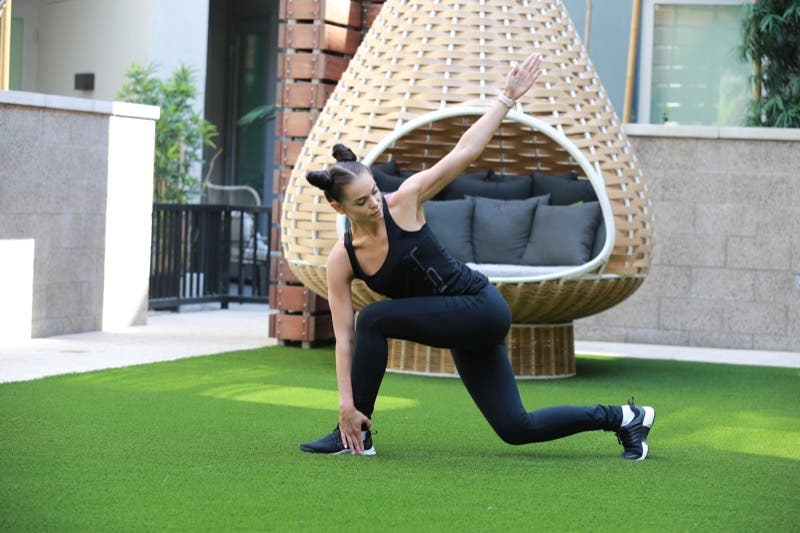
Stop doing this: Lunge
Start doing this: Lunge back with angular rotation
You’re probably familiar with lunges, but try a lunge back with an angular rotation. This exercise focuses more on the glutes and inner legs, and it also includes your core. The forward lunge focuses more on the quadriceps, muscles that already work during many moves (including back lunges and squats). Putting a focus on the glutes, hamstrings and inner legs helps create a more balanced body.
- Step back into a big lunge position and touch your outer part of your shoe with your opposite hand.
- Keep your weight on your front heel and front glute.
- The opposite hand is open and pointing 45 degrees back or straight up, depending on your flexibility.
- Freeze one second, focus on your glute and squeeze from there to bring your body to standing position.
- Keep squeezing your glutes while in standing position until you start the next repetition.
- Do 15 repetitions.
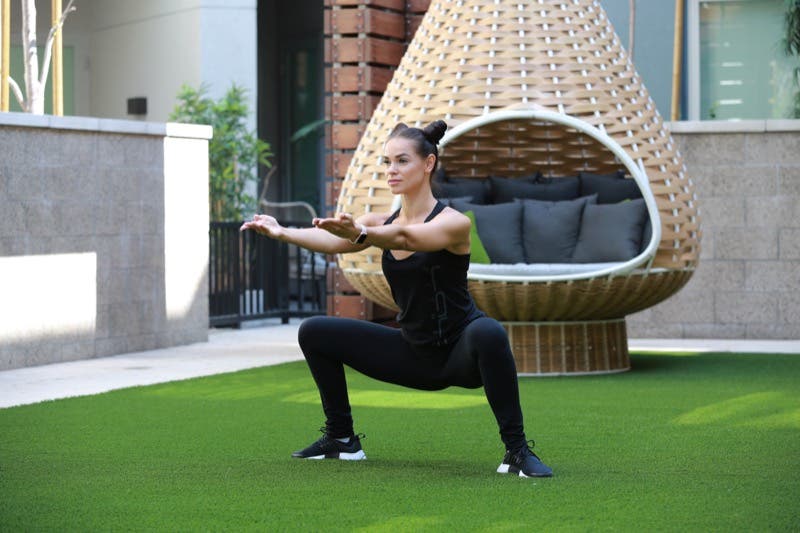
Stop doing this: Squat
Start doing this: Plié squat
If you’ve been neglecting your inner thighs, you aren’t alone. Plié squats are a great way to target the inner-thigh and inner-glute areas.
- To do this move, rotate your feet away from your body at about a 45-degree angle like a ballerina, then lower your body toward the floor as you would for any other squat.
- Place all your weight on your heels.
- Pull your knees open on the way down of the move to trigger the inner legs.
- Make sure your knees and the tip of your toes are aligned.
- When you are at the bottom part of the move, freeze for a second and then squeeze your knees in toward your glutes to make your body move upward (like if your legs were a nutcracker). This will trigger the inner part of the glutes.
- Keep your glutes squeezed on the top part of the exercise until it’s time for the next repetition.
- You can add an arm rotation during this move to include the shoulders and core muscles.
- Do 15 to 20 repetitions.
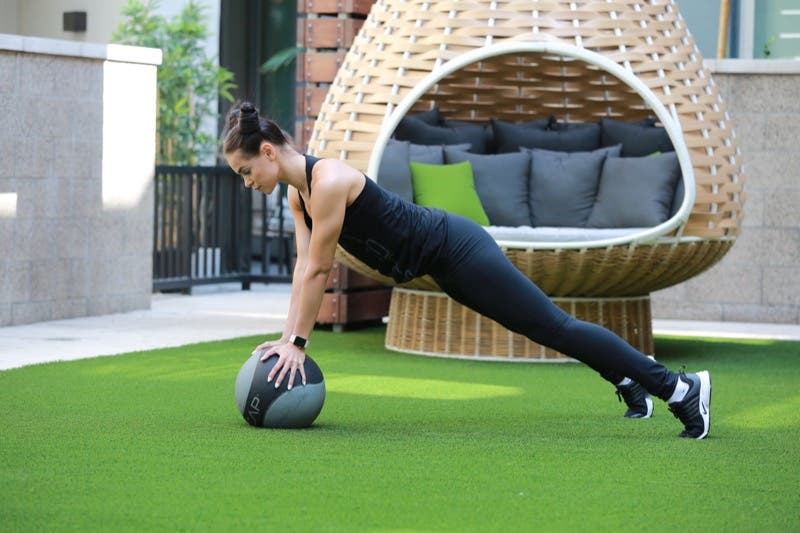
Stop doing this: Push-up
Start doing this: Plank on top of a medicine ball
“When training my female clients, including athletes, I stay away from push-ups,” Fuentes says. “Why? I don’t like how your chest reacts to push-ups. I want to make your upper body fit and strong while keeping your feminine look — your chest pointing forward. There are so many other exercises you can do to work your chest without the use of push-ups.” This exercise not only works on your chest but also your triceps, and it keeps your chest muscles parallel to each other instead of open and to the side.
- Place your hands on the sides of a medicine ball. You also can use dumbbells for this move.
- Place your body in a plank position.
- Make sure your chest is right on top of your hands.
- Keep your glute muscles tight.
- Squeeze your chest muscles and count to 20.
- Keep your shoulder blades together and your upper body tall while performing this exercise.
- Do five sets.
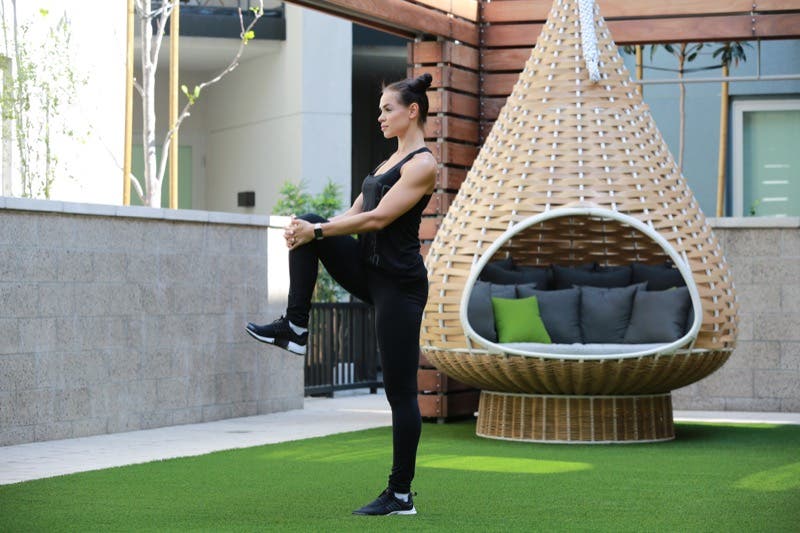
Stop doing this: Forward lunge
Start doing this: Lunge back with leg raise
To make your lunges more dynamic, raise your opposite leg up as you come to a standing position after each lunge. This emphasizes the glutes and helps with balance, which is very important to incorporate into an exercise routine.
- Lunge back and keep most of your weight on your front heel.
- Sit on your glute as if it’s a pillow.
- As you lunge, bring your arms up at a 90-degree angle to trigger your core muscles (upper back, underneath your shoulder blades).
- Freeze for one full second at the bottom part of the move and focus on your glute.
- Squeeze from your glute to go from lunge to standing position.
- Bring your arms down.
- When you reach the top part of the move, keep squeezing your glute until you start the next repetition.
- For balance, keep your weight on your front heel and keep your abs tight.
- When your leg is raised, make sure your knee is in front and your head passes/behind your hip area. This will create a weight balance.
- Do 15 repetitions.
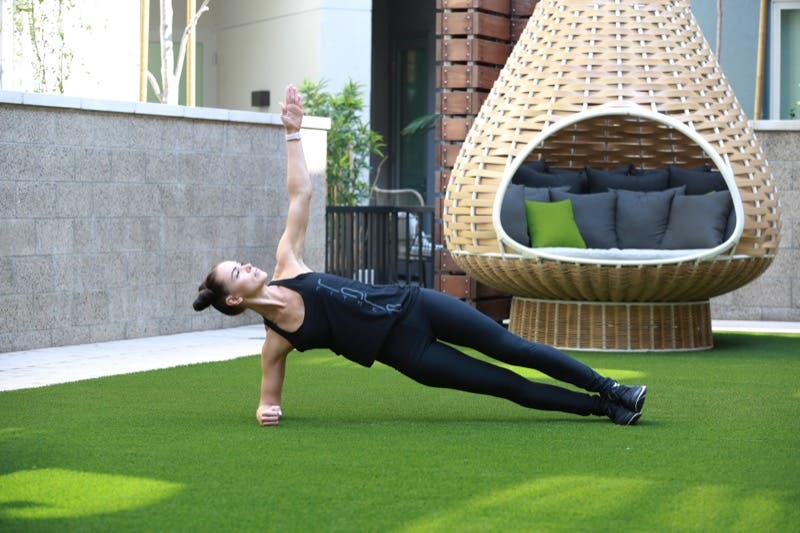
Stop doing this: Plank
Start doing this: Side plank with rotations
“Planks are great, but with this variation, you’ll be working your core, including your obliques, transversus abdominus, rectus abdominis and quadratus lumborum,” Fuentes says. “In essence, it works all those side ab muscles that make a body look super sexy.”
- While on side plank, make sure to keep your shoulder aligned with your elbow to protect your shoulder.
- Your hips are parallel to the floor so that you feel your obliques getting triggered.
- Your hand is straight up.
- Draw a big circle with your back, reaching down and behind until you feel your transverse abdominals firing.
- Freeze for one full second at the bottom part of the move.
- Come back to the starting position.
- To emphasize your serratus anterior, rotate toward chest level instead of the rib-cage area.
- Do 15 repetitions.
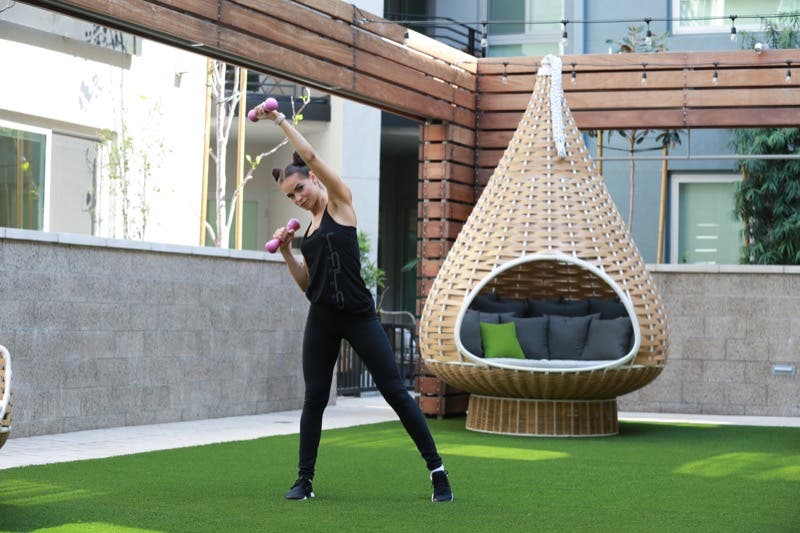
Stop doing this: Shoulder press
Start doing this: Shadow press
This move not only works on your shoulders but also on your legs and abs, and it includes a dash of cardio, all at the same time. “When you swing from a squat to a one-hand shoulder press into the other squat, the exercise becomes more difficult,” Fuentes says. “This means we need to use less weight than on your usual shoulder press. I like it because it keeps you from lifting too much weight on the shoulders and bulking up. Instead, you will get a faster burn into the shoulders.” If you can’t flow during the execution of this exercise, those weights might be too heavy for you.
ADVERTISEMENT
This move is like a shadowboxing move, but you are going all the way down into a squat. While you go into a squat, shift your bodyweight from one leg, then come up reaching to one side, then back into a squat, placing most of your weight into the other leg and then reaching to the other side. While you are reaching, keep your abs tight to include your core into the work. Do 20 repetitions.
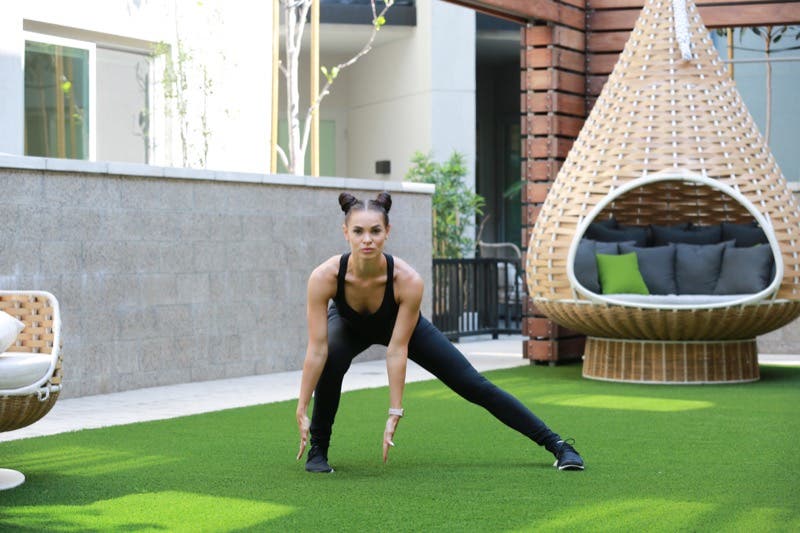
Stop doing this: Side step
Start doing this: Side “walking” step
The old side step (in which you do a step and come back the same way) works mostly your quads and hip flexors, while the side walking step works your glutes and inner legs. Fuentes says that adding weights (3 to 5 pounds max) to this exercise will increase the challenge and trigger the core muscles, as well (right underneath your shoulder blades). Plus, you can add a shoulder press to it to complete the move and make it a multi-joint exercise.
- Step to the side and align your knee with your glute so you see a straight line if viewed from the front. This will make your inner-leg muscles fire up.
- Sit on your glute like it’s a pillow, maintaining your position parallel to the floor.
- Freeze for one full second and then squeeze from your glute while standing toward the step, letting your inner leg help you with the move.
- When you reach the standing position, bring your hip forward while you keep squeezing your glute. This will prime your glute to do the work on the next rep.
- Always walk toward the step you just made.
- If you have space, do 15 repetitions to one side and then 15 to the other side. If you don’t have space, then do one step to each side.
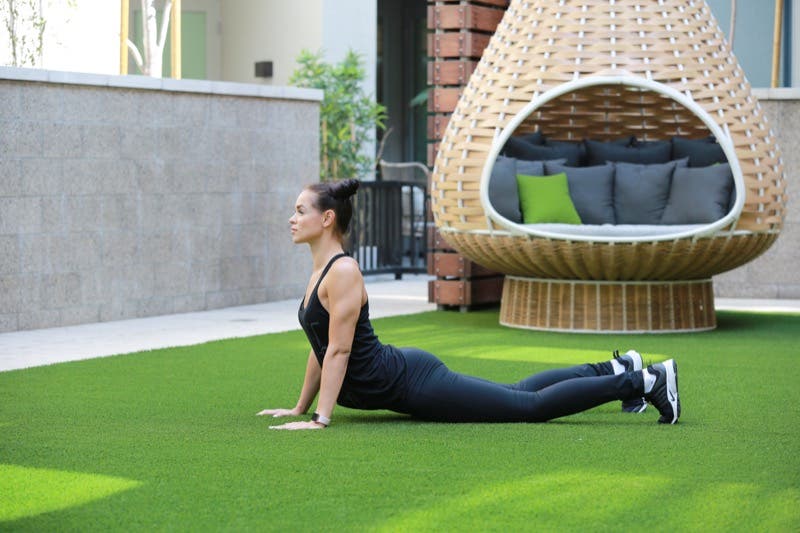
Stop doing this: Triceps extension
Start doing this: Floor triceps extension
The floor triceps extension works on the triceps but also works on stretching and opening up your back, chest and shoulder muscles. This is a great exercise to decrease stiffness on your lower back.
- Lie facedown on the floor.
- Place your hands next to your chest.
- Close your elbows and bring your upper body up.
- Keep your hips on the floor when performing this move.
- On the way up, roll your shoulders back and open up your chest.
- Try to go as high as you can while maintaining a comfortable position.
- Freeze for one full second on the top position and focus on getting a good burn on the triceps.
- Lower your body slowly to the floor, freeze another second at the bottom of the move and repeat.
- Do 15 repetitions.
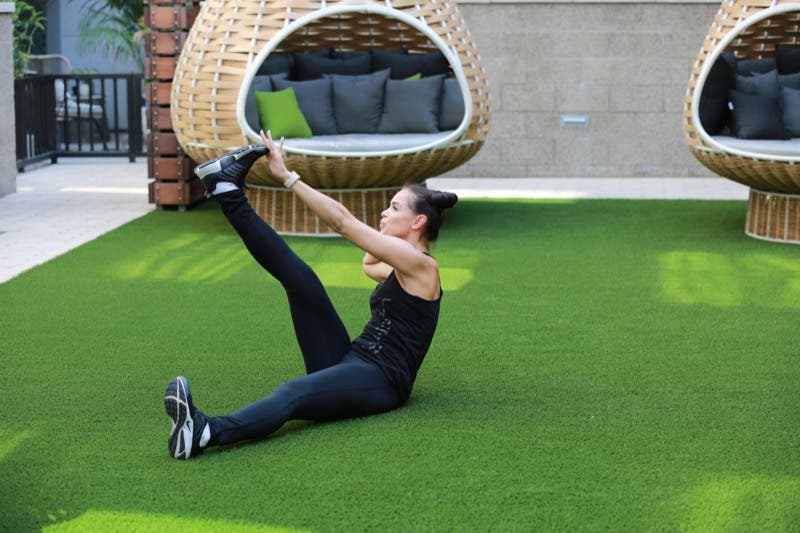
Stop doing this: Crunch
Start doing this: Crunch with a tap on opposite foot
Take your regular crunches to the next level by touching your toes. Come up and tap your right toe with your left hand, then when you come back up again, tap your left toe with your right hand. This more advanced move incorporates the muscles in your lower abs as well as the sides of your abdomen. The key for this exercise is to freeze on each point of the move to make your abdominal muscles work full time. Make sure all the moves are controlled. Do 15 to 20 repetitions.
ADVERTISEMENT
“There’s nothing quite as frustrating as putting your all into your workouts but not getting anywhere,” Fuentes says. “If you’re not making progress, you might be in a rut — so bust out of it. That doesn’t mean you need to totally scrap your fitness routine. It simply means that a few small tweaks are needed to help get you back on track.”