Published February 18, 2021 10:04AM
4 Lunge Exercises You'll Love
Change up this overplayed classic move and breathe new life into your lower-body workout routine.
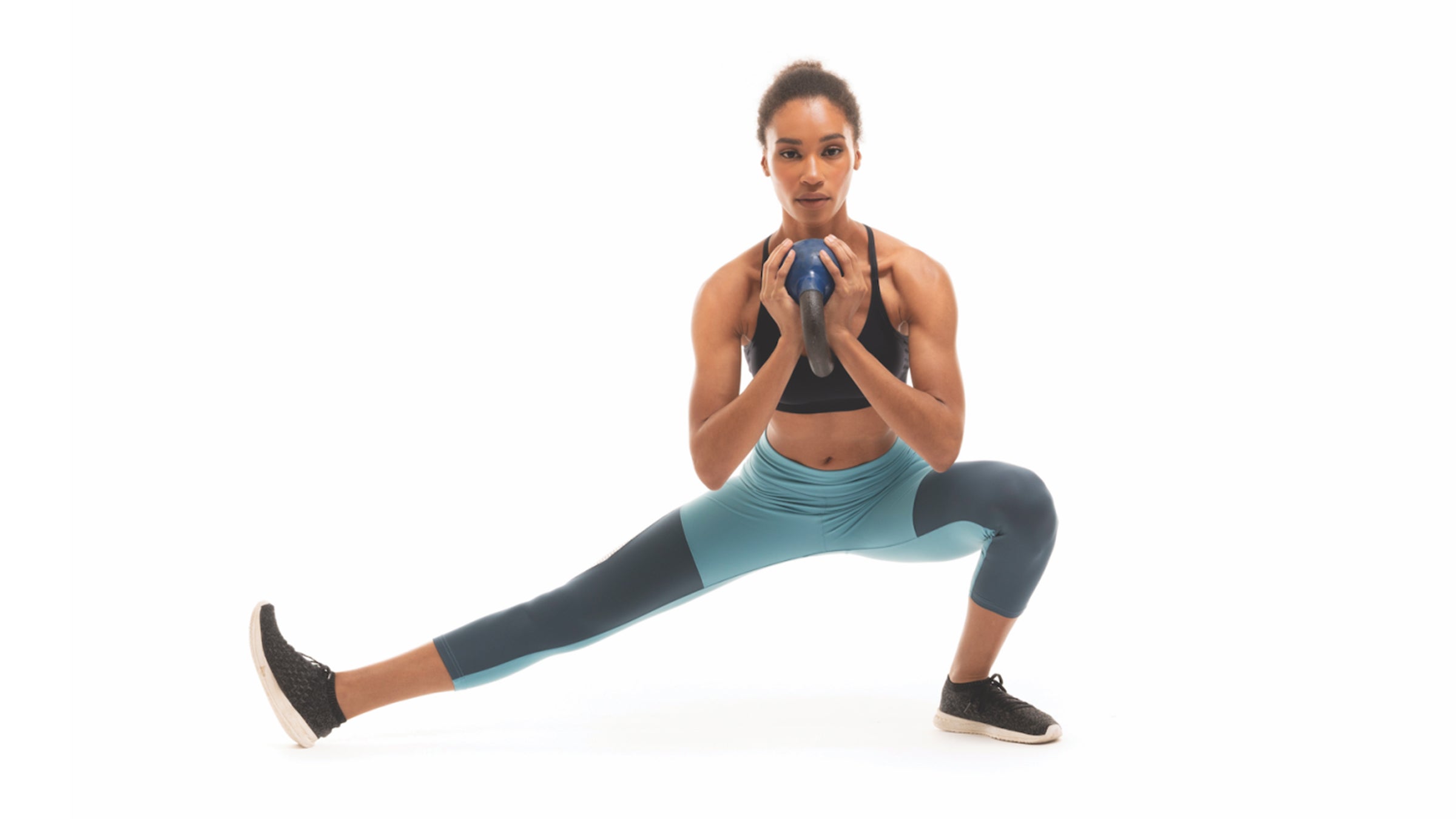
As far as lower-body exercises go, lunges are one of the best for developing strength, building endurance and improving balance. But truth: They are also exceedingly boring. Use these four exercises to level up your lunges — and still keep a level head.
Level 1: Unilaterally Loaded Split Squat
The split squat helps develop balance and control while maintaining proper hip, knee and ankle position. Unlike a true lunge, your base in a split squat doesn’t move, keeping the tension on your glutes and quads and preventing you from using momentum. Here, you’re loading just one side to challenge your core and hip stability.
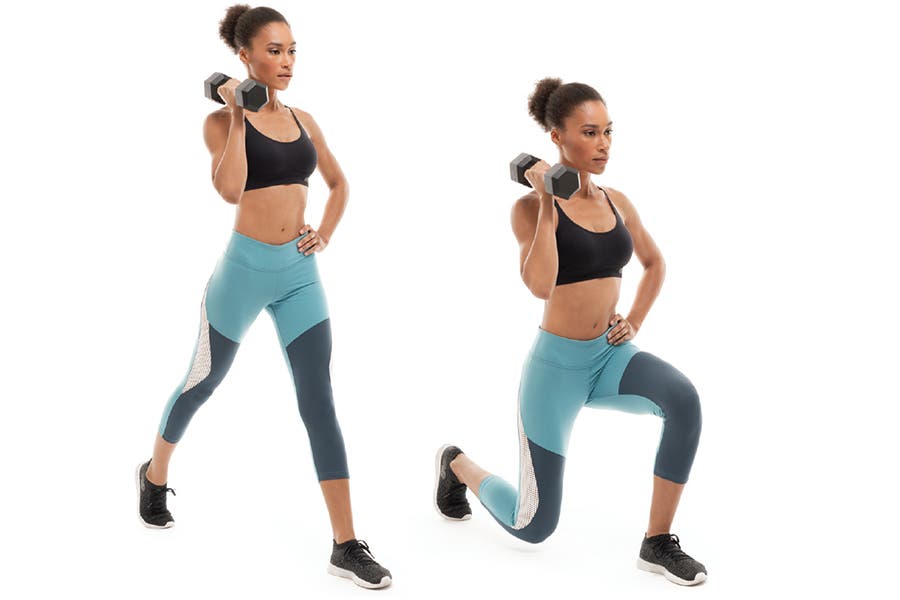
Hold a dumbbell in your right hand at shoulder height with your chest lifted and elbow down, and stand with your feet in a split stance, left leg forward, right leg back and up on your toes. Keep your torso erect as you bend both knees and drop straight down toward the floor until both legs form 90-degree angles at the hips and knees. Extend your legs to return to the start. Complete all reps on one side before switching.
For this move, first try holding a weight on the same side as your back leg, then try loading on the opposite side (front leg) and see how it increases the instability and makes the move that much harder.
ADVERTISEMENT
Troubleshooting
- Since this move is unilaterally loaded, the dumbbell will want to pull your torso over to the weighted side. Focus on keeping your rib cage level with the floor and squeezing your shoulder blades down to maintain balance and stay square, with your center of gravity over your hips.
- If you feel off-balance, either your starting stance is too narrow — e.g., like you’re walking a tightrope — or your feet are too far apart front to back. Adjust your stance until you hit those right angles and are able to maintain contact with the floor with the entire sole of your front foot.
Level 2: Around The World Lunge
Multi-planar lunges like this train your muscles to control movement patterns in every direction. Do this version with a light pair of dumbbells for endurance or with bodyweight only as a dynamic warm-up for a heavy leg day.
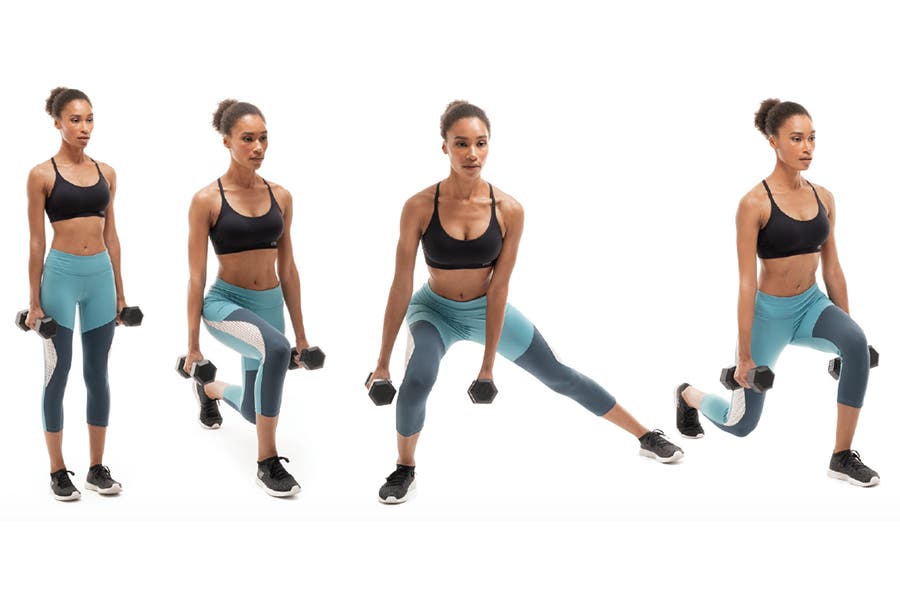
Stand with your feet hip-width apart and your arms at your sides or clasped in front of you. Take a large step forward and bend both knees to drop straight down toward the floor, keeping your front knee over your toes and stacked directly on top of your ankle. Push off your front foot and return to center, then step to the side, kicking your glutes back while keeping your torso erect. Return to center and then take a step backward and bend both knees to lower into a reverse lunge. Return to standing to complete one rep.
ADVERTISEMENT
To emphasize your glutes and deep hip rotators, perform the reverse lunge as a curtsy instead: Step behind and across the stationary leg while keeping your hips level and maintaining knee and ankle alignment.
Troubleshooting
- Use the entire bottom of your working foot to push off forcefully from each lunge, generating enough drive to bring you to standing. This prevents you from pulling with your stationary leg or swinging your upper body/arms around to create momentum.
- Trouble with control? Do the move with bodyweight only and change the tempo, taking four counts to lower and two counts to rise.
Level 3: Cossack Squat
This move requires flexibility and control in the end range and can help you train for depth in a squat or for stability at the catch position of a clean or snatch. Holding a weight at chest height counterbalances your hips to prevent you from falling backward if your ankle flexibility and core stability aren’t quite there yet.
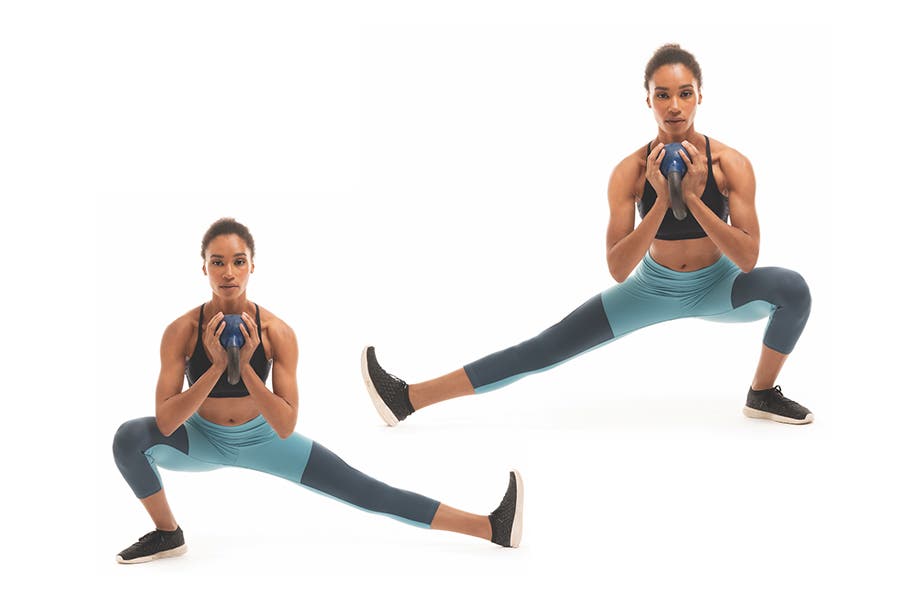
Hold a dumbbell or kettlebell with both hands at your chest, elbows down, and stand with your feet double shoulder-width apart and turned out 45 degrees. Bend your right knee to lunge to the right, dropping your hips down as low as you can while keeping your chest lifted. Your opposite leg should stay straight with your foot either flat or flexed. Staying low, shift your weight over to the left side so your left knee is bent and your right leg is straight. Continue, alternating sides with control.
Troubleshooting
- Don’t allow the weight to pull you forward and cause your shoulders to round, compromising your neck and spine. Actively pull your shoulder blades down and back, and keep your focus forward to help you stay upright.
- Whether you leave your non-lunging foot flat or flexed, it depends on the mobility of your adductors and hamstrings. Try both versions and see which you can perform and control without pain.
Level 4: Lunge Jack
With the addition of a plyometric element, a regular lunge is transformed into this metabolic booster. Here, you’ll hammer one leg at a time, with just a small reprieve as you jump briefly to center.
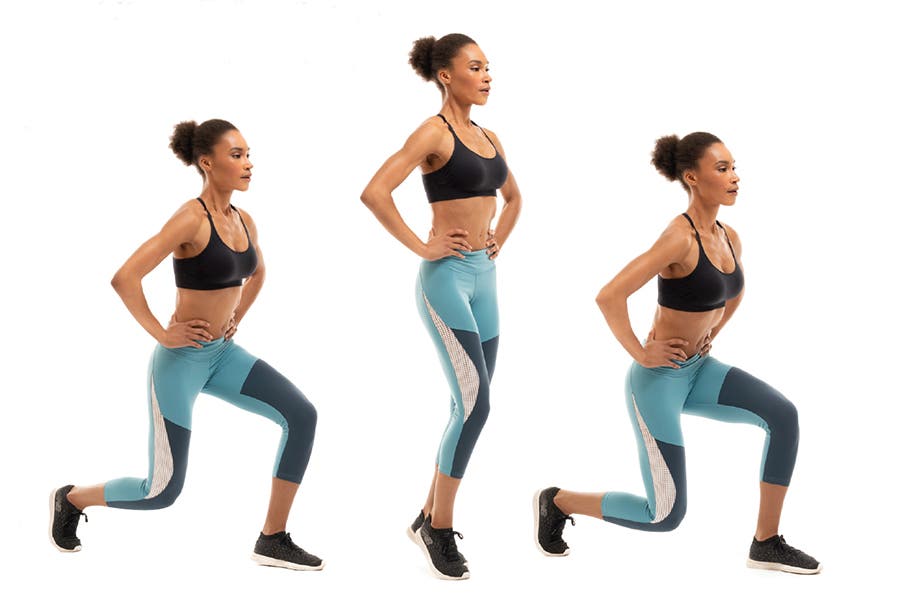
Assume a wide split stance and bend both knees to lower into a lunge. Your knees and hips should make 90-degree angles with your torso directly over your back knee and your rear foot balanced on your toes. Hold here for a count of two, then push off both feet and jump into the air, quickly bringing your feet underneath you and landing gently and quietly on your toes with your knees and hips soft. Immediately jump back out into the lunge and hold again for a count of two. Perform all reps on one side before switching.
ADVERTISEMENT
Troubleshooting
- Even though you are jumping in and out, your lunging form should stay on point — feet hip-width apart with your front heel on the ground. Move your arms in opposition to help you maintain balance and keep a consistent tempo.
- It is tempting to try to “stick” the landing with stiff legs in order to speed up, but this only transfers the impact to your joints. Focus on higher reps and/or faster speed rather than height, and land with your knees and hips soft and slightly bent.