Published February 24, 2017 09:37AM
If you buy through our links, we may earn an affiliate commission. This supports our mission to get more people active and outside.Learn about Outside Online's affiliate link policy
Why Every Woman Should Deadlift
Whether you’re preparing for a half marathon, looking to get lean or want to become a more efficient human, deadlifting can help unlock your true potential.
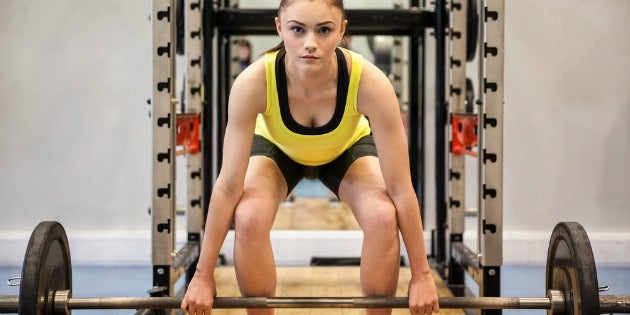
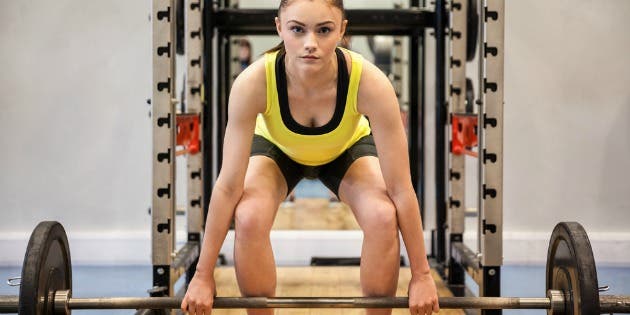
Even if you’ve never set palms to bar, the mechanics of a deadlift are as innate to you as breathing. Humans were engineered to hinge at the hips and load the hamstrings in order to bend over and grab an object, then to stand by extending the legs and hips to lift it with a strong core and back.
“It’s a natural movement, and even babies deadlift,” says C. Shante Cofield, DPT, founder of TheMovementMaestro.com. “We start losing [the mechanics] over time because our bodies take the path of least resistance.” In other words, it’s easier (read: lazier) to round forward and haul something up using your back and arms than it is to drop into the proper position and perform the lift safely. But reconnecting with this ingrained and functional lift is well worth any woman’s time. Read on to see why.
ADVERTISEMENT
The Queen of All Lifts
First and foremost, deadlifts offer an opportunity to be one of our heaviest movements, and it’s not uncommon for a woman to deadlift more than her own bodyweight. A big lift like this means equally big returns in strength and power, and hence the creation of lean mass.
Deadlifts also engage the entire posterior chain, including the hamstrings, glutes, shoulders and back, as well as 360 degrees of your core musculature. “Using that many muscles has a powerful [anabolic] effect on the body,” explains Rob Sulaver, CSCS, founder of Bandana Training in New York, New York. “When you lift heavy, intensely and aggressively, you create a hormonal environment that’s great for both strength gains and fat loss.” Targeting the posterior chain can also be corrective for women who are typically quad dominant. “Because we sit so much, the glutes and hamstrings are turned off,” Sulaver says.
ADVERTISEMENT
That kind of imbalance leads to faulty movement patterns and possible injury, and it also can decrease performance. “A lot of my female clients are runners, and having strong hamstrings helps them with foot speed,” Sulaver says.
Then, of course, there are the aesthetic benefits — deadlifts can lead to the round, lifted rear view we all long for and love.
Yes We Can!
While the squat demands unimpeded ankle mobility and Olympic lifts require advanced skills, the deadlift is accessible to nearly all women, including weightlifting novices. “It’s a nice, safe way to introduce people to moving heavy weight,” Cofield says. Plus, lifting something heavier than yourself feels crazy good. “Everyone wants to feel strong, and when you’re lifting heavy s–t off the ground, that’s empowering,” Sulaver says.
Use these tips from our coaches to perfect your form and get the most from this kick-ass lift.
- Stand with your feet about shoulder-width apart with your shins perpendicular to the ground and your toes underneath the bar.
- Hinge back with your hips, then bend your knees until you can grasp the bar outside your legs in an overhand grip, or in an alternating grip if you’re going heavier.
- Your shoulders should be over the barbell, and your hips should be higher than your knees at the start. Note: If your butt shoots up in the air before the bar leaves the ground, your hips are too low in the setup.
- Retract your shoulder blades to stabilize your upper back and shoulder joints. Sulaver cautions against excessive retraction, which increases the distance the bar has to travel. Work to keep your shoulders stable yet neutral and relaxed.
- Inhale to create intra-abdominal pressure to protect your spine and pull up slightly to take the slack out of the bar and create tension in your body.
- Stand up by extending your hips and knees at the same rate so the bar travels in a straight vertical line.
- Maintain a flat back and engage your core musculature to provide stability. A simple bracing cue: Cofield suggests you pretend you’re preparing for a punch in the stomach.
- As you reach full extension, press your hips forward and squeeze your glutes.
We independently source all of the products that we feature on oxygenmag.com. If you buy from the links on our site, we may receive an affiliate commission, which in turn supports our work.